
I had intended to make my first posting in my ‘theory’ category an overview of my theory of holistic architecture, including definitions and characteristics.
But the death of architect Frank Gehry requires some immediate thoughts on his place in architecture, especially in relation to holism and holistic architecture.
Along with architect Zaha Hadid, who died way too young nine years ago, architect Gehry developed the seminal works of holistic architecture. Both used large public buildings such as museums and performance halls to experiment with their ideas and exhibit this new architecture that reached far beyond modernism, post-modernism, or deconstructivism.
Judging from the extensive biography of Frank Gehry published by Paul Goldberger (“Building Art: The Life and Work of Frank Gehry”, 2015) as well as many videos publicly available interviewing Mr. Gehry, he never used the term ‘holistic’. He also rarely talked about architectural styles, although he did deny that he was a ‘deconstructivist’. He never talked about the Information Age influences on his architecture other than the value of the computer to make his work buildable.
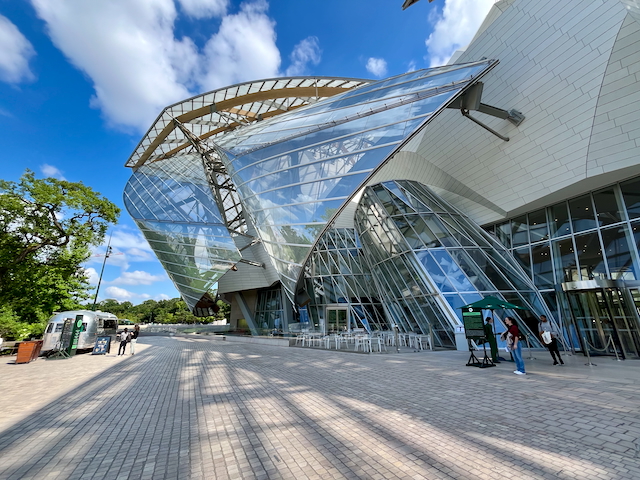
Louis Vuitton Foundation, Paris
He said he was an artist and sculptor, not a philosopher. We should believe him, and a review of his work reveals the artistry that influenced his work. Nevertheless, he commanded the primary place in the development of the new holistic architecture. I will be posting about his contributions in this space over the coming years.
 Architecture Vietnam
Leave a comment