
In my last posting on “Defining Vietnamese Identity in their Modernist Architecture”, I stated that I had determined Vietnamese identity from my study of Vietnamese traditional architecture. I see this form of identity as a cultural identity as expressed in architecture, not in nationalism.
In my research, I learned that the young Vietnamese architects and students in the mid-twentieth century developed their modernist architecture based upon their study of traditional architecture. They did not copy the traditional architecture, but rather learned the principles of Vietnamese design as expressed in traditional buildings, and adapted these principles for modernism.
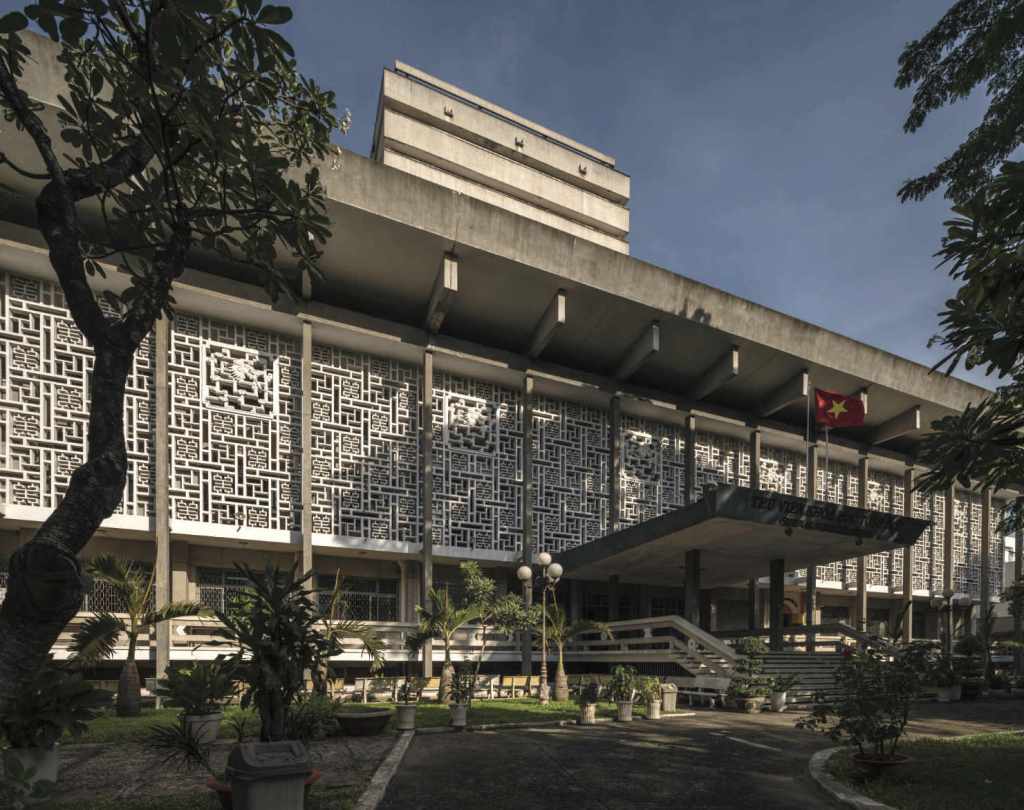
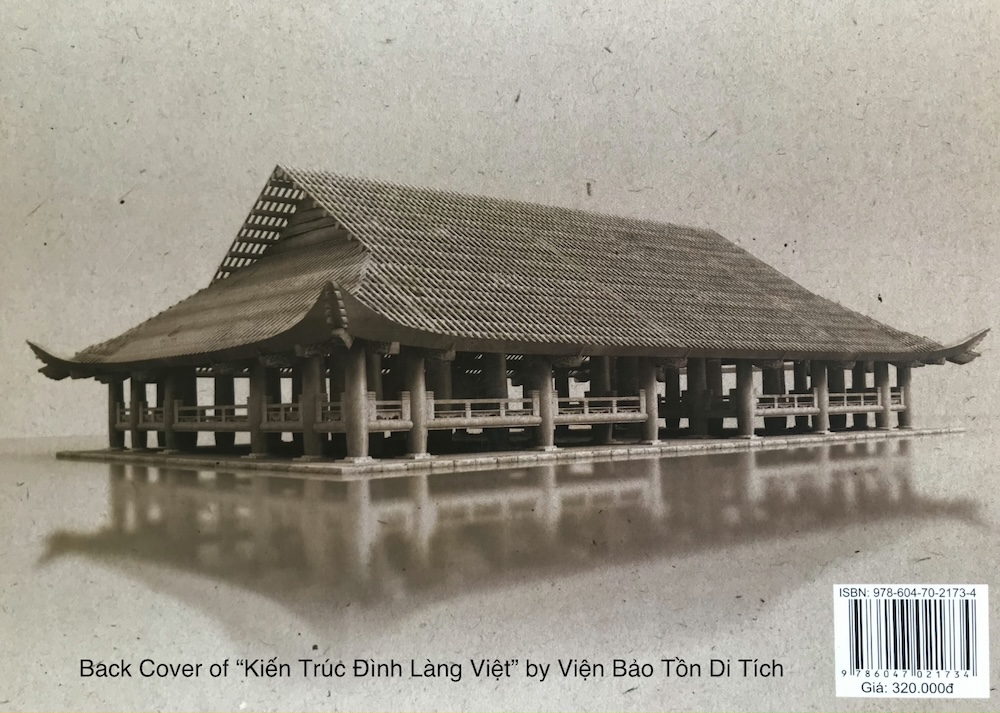
Consider a typical Vietnamese traditional building, such as a đình (a community hall that accommodates government administration, worship of local gods, and social or cultural events). A typical đình is shown on the right in the photograph. On the left is the General Science Building in Ho Chi Minh City, a stellar example of Vietnamese modernist architecture. In comparing the two images from the roof of each building on down, you can perceive the principles of Vietnamese architecture.
- The roof forms are quite different, but the response to the hot tropical climate is similar. In the đình, the hot air rises and makes its way out the porous tile roof. In the modernist building, there is a layer of air acting as insulation between the hot roof slab above and the ceiling of occupied spaces below, keeping the interior spaces cool.
- The building structure for both buildings is a clear expression of post-and-beam construction, although the reinforced-concrete structural frame of the modernist building allows greater spans between columns.
- During the nighttimes, the traditional buildings were closed up with ventilation screens, and the modernist building uses similar screens to block the majority of the sun’s heat energy while allowing plenty of cooling natural ventilation. In this case, these screens in the library building use traditional Vietnamese patterns.
- The traditional buildings usually had verandas to shade the exterior walls of the building from the hot sun, shown in this model of a đình as wide roof overhangs. In the library, the reverse of a veranda is used in the form of a logia inset on the ground floor, which accomplishes the same goal of keeping the hot sun from heating up the exterior walls and also providing shade for socializing space.
- The đình model on the left does not show a body of water in front of the đình in accordance with Vietnamese phong thuỷ principles, but there usually is. The library has a water moat along the entire front facade of the building, cooling the air as it crosses the moat and into the building.
- The natural materials of the traditional architecture, primarily wood, exhibit earth-tone colors, and the Vietnamese modernist architecture always exhibits earth-tones or grey colors, even though the materials are not natural.
Both the traditional and modernist architectures in southern Vietnam are complex but elegantly clear, as shown in both images. At the same time, the restraint shown in the traditional architecture is also a key characteristic of the Vietnamese modernist architecture of the mid-century.
 Architecture Vietnam
Leave a comment